jueves, 5 de abril de 2012

Jonathan Swift


  •   He was born in 30 November 1667 and died 19 October 1745. 
  •   Swift was a satirist, essayist, poet and cleric.
  • His most important works are: Gulliver's Travels, A Modest Proposal, A Journal to Stella, Drapier's Letters, The Battle of the Books, An Argument Against Abolishing Christianity, and A Tale of a Tub.
  •   At the beginning, Swift published all of his works under pseudonyms such as Lemuel Gulliver, Isaac Bickerstaff, M.B. Drapier or anonymously.
  •   Gulliver's Travels is considered Swift's masterpiece
  •   He developed Meniere's disease, which affects the inner ear and causes dizziness, vertigo, nausea, and hearing loss.
  • Swift became the Dean of St. Patrick's Cathedral and he was involved inpolitics, writing for both the Whigs and the Tories.
  •  In 1729 Jonathan Swift wrote A Modest Proposal 
  •   Jonathan died on 19 October 1745, aged 78.

lunes, 26 de marzo de 2012

Edmund Spenser


Edmund Spenser
v  He was born in 1552 and die 13 January 1599
v   
Spenser  was an English poet best known for The Faerie Queene which deals with the adventures of knights, dragons, ladies in distress.
v   
He got married with Machabyas Chylde and they have two children. 

v   

Edmund Spenser published his first important work, The Shepheardes Calender in 1580.
v   
After reading the Faerie Queen, Sir Walter Raleigh persuaded him to visit London in 1590, where he presented Spenser and his poem to the Queen.
v 
 In the sonnet Amoretti and Epithalamiumhe celebrated his second marriage with Elizabeth Boyle. Here, he detailed their love and its consummation in their marriage.
v   
He was buried in Westminster Abbey, his tomb close to that of Geoffrey Chaucer.

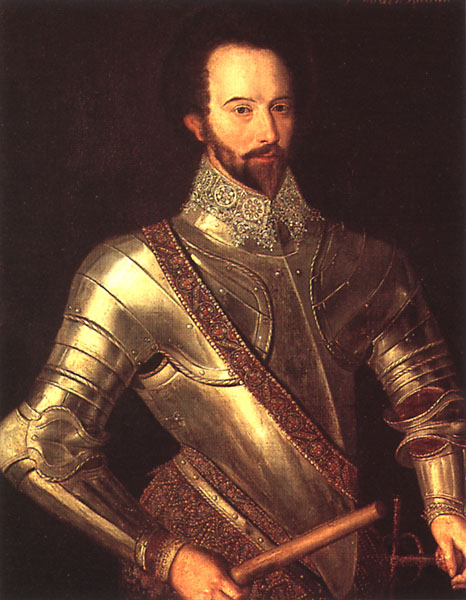
Sir Walter Raleigh


SIR WALTER RALEIGH
·         He was an explorer, soldier, and writer, born in Hayes Barton.
·         He became the Queen’s favorite at court, receiving a Knighthood in 1585.
·         He took part in North and South America, and several literary works resulted from his travels.
·         Sir Walter was a cultured man and a close friend of poet Edmund Spenser.
·         Queen Elizabeth imprisoned him for a short time because he got marriage with one of hers maids of honor.
·         Raleigh was convicted of treason and spent 13 years in the tower of London were he wrote several books.
·         In 1616 he was released from the Tower of London to lead a gold-hunting expedition to Guiana, the trip was his last chance to prove his worth to king James, but it was a disaster.
·         He got a tropical fever, was arrested and executed in 1618.

A Farewell to False Love

Farewell, false love, the oracle of lies,
A mortal foe and enemy to rest,
An envious boy, from whom all cares arise,
A bastard vile, a beast with rage possessed,
A way of error, a temple full of treason,
In all effects contrary unto reason.

A poisoned serpent covered all with flowers,
Mother of sighs, and murderer of repose,
A sea of sorrows whence are drawn such showers
As moisture lend to every grief that grows;
A school of guile, a net of deep deceit,
A gilded hook that holds poisoned bait.

A fortress foiled, which reason did defend,
A siren song, a fever of the mind,
A maze wherein affection finds no end,
A raging cloud that runs before the wind,
A substance like the shadow of the sun,
A goal of grief for which the wisest run.

A quenchless fire, a nurse of trembling fear,
A path that leads to peril and mishap,
A true retreat of sorrow and despair,
An idle boy that sleeps in pleasure's lap,
A deep mistrust of that which certain seems,
A hope of that which reason doubtful deems.

Sith then thy trains my younger years betrayed,
And for my faith ingratitude I find;
And sith repentance hath my wrongs bewrayed,
Whose course was ever contrary to kind:
False love, desire, and beauty frail, adieu!
Dead is the root whence all these fancies grew.


sábado, 3 de marzo de 2012

Sonnets


Sonnet  18 
Shall I compare thee to a summer's day?
Thou art more lovely and more temperate:
Rough winds do shake the darling
buds of May,
And summer's lease
hath all too short a date:
Sometime too hot the eye of heaven shines,
And often is his gold complexion
dimmed,
And every fair from fair sometime declines,
By chance or nature's changing course
untrimmed;
But thy eternal summer shall not fade
Nor lose possession of that fair thou
owest,
Nor shall Death
brag thou wander'st in his shade,
When in eternal lines to time thou
growest:
So long as men can breathe or eyes can see,
So long lives this, and this gives life to thee. 
Sonnet 130 
My mistress' eyes are nothing like the sun;
Coral is far more red than her lips' red;
If snow be white, why then her breasts are
dun;
If hairs be wires, black wires grow on her head;
I have seen roses
damasked, red and white,
But no such roses see  in her cheeks;
And in some perfumes is there more delight
Than in the breath that from my mistress
reeks;
I love to hear her speak, yet well I know
That music hath a far more pleasing sound;
I grant I never saw a goddess go
(My mistress when she walks treads on the ground).
   And yet by heaven I think my love as rare
   As any she
belied with false compare.
Sonnet 29
When, in disgrace with Fortune and men's eyes,
I all alone
beweep my outcast state,
And trouble deaf heaven with my
bootless cries,
And look upon myself and curse my fate,
Wishing me like to one more rich in hope,
Featured like him, like him with friends possessed,
Desiring this man's art and that man's scope,
With what I most enjoy contented least;
Yet in these thoughts myself almost
despising
Haply I think on thee, and then my state,
Like to the
lark at break of day arising
From
sullen earth, sings hymns at heaven's gate:
   For thy sweet love remembered such wealth brings
  That then I
scorn to change my state with kings.
Sonnet 30
When to the sessions of sweet silent thought
I
summon up remembrance of things past,

William Shakespeare


He was an English poet. He is regarded as the greatest writer in the English language. His works include about 38 plays which have been translated into Spanish, French, among others, 154 sonnets, two narrative poems, and several other poems.

Shakespeare was born in 1564; his life can be divided into three periods. The first 20 years of his life includes:
·         He studied in Stratford.

  • At the age of 18, he married Anne Hathaway, with whom he had three children: Susanna, and twins Hamnet and Judith.

The second period was between 1585 and 1592

  •     He began a successful career in London as an actor, writer, and part owner of a playing company called the Lord Chamberlain's Men.

Third period:

  • He appears to have retired to Stratford around 1613 at age 49
  • Shakespeare produced most of his known work between 1589 and 1613.
  • He wrote about 1608tragedies, including Hamlet, King Lear, Othello, and Macbeth.

It is said William Shakespeare isn’t the author of his works; there are evidence that proves Shakespeare existed but not that he was a playwright, an actor or a poet. It is suggested that he was just a businessman and propose several contenders for authorship, namely an Edward de Vere.
In the 20th century, his work was adopted and rediscovered. Nowadays his plays remain popular and are constantly studied, performed, and interpreted in several cultural and political contexts throughout the world.
William Shakespeare died 23 April 1616.


domingo, 5 de febrero de 2012

The Bayeux Tepestry


 THE BAYEUX TEPESTRY...
 

The Bayeux Tepestry is one of the most historically important chronicles of the Norman Conquest of England, is now located in the town of Bayeux in Normandy.

It begins with Harold of Wessex’s visit to Normandy and his meeting with Duke William in 1064, and culminates with the flight of the English army at Hastings.
It Includes the death of King Edward the Confessor in January 1066, Harold's coronation, William's elaborate invasion preparations, his landing at Pevensey, the Battle of Hastings and Harold's death.

There are decorated borders illustrating scenes, hunting and husbandry and also some episodes from the fables of Aesop and Phaedrus. Although it was almost destroyed in 1792 when French revolutionaries used it as a wagon cover, the whole has survived to this day and can still be viewed by visitors to the town of Bayeux.

The Tapestry consists of 626 humans, 55 dogs, 202 horses, 41 ships, 49 trees, almost 2000 Latin words, over 500 mythical and non mythical creatures such as birds and dragons. At least 8 colours of yarn are discernible. It is approximately 70 metres long and half a metre wide.


The Battle of Hastings


When your new teacher of English literature asks you: When was the Battle of Hastings? Who won it? And, you don’t know the answer or you just don’t remember it… With just 7:27 minutes you can remember what you saw in high school. I loved the video because is not only very clear but is very well explained and give the details in order to understand what happened that October 14, 1066.
One of the things I love the most from the video was that the story was told from the place where the battle happened, it's a feeling I can’t explain but it made me feel as if you were living the moment, not in the middle of the battle of course, but all the feelings that a war brings whit it, as a vibe that takes you to that day.
The Battle of Hastings occurred on 14 October 1066 during the Norman conquest of England , between the Norman-French army of Duke William of Normandy and the English army under King Harold II. This battle is seen as the point at which William gained control of England, becoming its first Norman ruler as King William I.